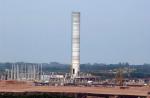
generate Pulp Mills
unemployment
The intention of installing two pulp manufacturing plants on the east bank of the River Uruguay, by the Botnia (Finland) and Ence (English), with the support of the Uruguayan government, provoked strong opposition from the Gualeguachú population and the Argentine government, and led to an international conflict is at issue now before the International Court in The Hague, where the government filed a claim for, inter alia, violation of bilateral agreements for the use of border river between the two countries.
Argentina argues that the production of one and half million tons per year cellulose, and discharge of highly polluting effluents into the river, in large volumes as planned, will cause grave and irreversible damage to health and economy of the inhabitants of the region, both Uruguayan and Argentine.
The Uruguayan government, for its part, rejects such extremes, says that pollution will be minimal and not affect the health of humans, but refuses to accept the intervention of a neutral international commission to assess environmental impacts. The Uruguayan government argues, moreover, an investment figure of almost two billion dollars and will generate a significant amount of jobs, when the unemployment rate in that country exceeds 12 percent.
In Uruguay, all parliamentary political parties, chambers of commerce, the trade union and the major mass media, support the installation of plants, based on the investment will help alleviate unemployment, while the opposition is reduced to small radical groups, the majority of non-governmental environmental organizations, a community of professionals concerned about environmental degradation and personalities of art and culture.

Opponents have signed several requested the government-between including one supported by many graduates of the University of the Republic, agronomists, chemists, biologists and other scientists, and one sent by the participants in the V World Social Forum in Porto Alegre, which subsequently acceded to numerous individuals to prevent the installation of plants, but announced he would continue supporting them. Given this, some sectors have raised, at least, be required to use the latest technology, ie the so-called TCF (Totally Chlorine Free), since it is a closed loop technique, almost no liquid effluents.
Despite the enormous risks involved and the use of the TCF does not guarantee that there is no pollution and it will occur anyway, due mainly to the huge volume of toxic substances to be discharged to the environment, water, land and air as a result of a large industrial process scale, the demand for its application, opponents contend, would be a less ominous to support the imposition of these plants whose installation will bring the country much more harm than good.
There are two central issues in this debate: the creation of jobs and the degree of pollution that cause these industries.
On this latter point is evident that has been withheld information to the public, both from companies and from government and from international agencies. For those who have always struggled for political life changes that promote social justice and greater independence of the great centers of power, it is hard to see how our current leaders and some leaders of the left, when the press refers to them, support their argument on a World Bank report endorses the government's position and enterprises around the insignificance of environmental damage.
Is now the World Bank reports are reliable?, When all life that institution has been marked by investing millions de dólares en informes técnicos cuyos resultados han sido, invariablemente, favorecer a las grandes empresas transnacionales en perjuicio de las pequeñas empresas nacionales, favorecer a los países ricos en contra de los países pobres y dentro de estos, favorecer a las clases ricas en perjuicio de las clases pobres. El eterno discurso del Banco Mundial -así como de otros organismos financieros internacionales similares- es: “hacemos lo que hacemos para favorecer a los pobres”, y el eterno resultado de las acciones de esa entidad es que los países pobres como el nuestro y a su vez los pobres dentro de cada país son los eternamente perjudicados. ¿Por qué razón tenemos que confiar ahora en los informes del Banco When World have always been harmful to people?
But it seems the height of naivete or of shamelessness "God knows" is that nobody seems to realize it was quite logical that the World Bank approved the loan, because lending money at interest is an activity main bank and the financial transaction were to materialize was a prerequisite that the environmental report was favorable to the plants. The audacity, the cheek on, these people have no limits: with a cynicism foolproof they put the pompous title of Ombudsman (Ombudsman) to the person who ran this operation financed by the World Bank to deceive unwary. And the sad thing is that so far have not heard such voices that question trick. Worse, to shame the people Frente leaders manage that report as if it were a revealed truth.
The Frente Amplio is the party of government in Uruguay. For its part, the Group Guayubira-questioning the installation of the plants, says the ombudsman's report confirmed his allegations regarding the inadequacy of environmental impact assessments (EIAs) carried out by companies and approved by the Ministry Housing, Spatial Planning and the Environment (MVOTMA) regarding the lack of adequate controls by the government regarding the lack of assessment de los impactos sobre diversos sectores económicos, en particular la agricultura, la pesca y el turismo, así como sobre las poblaciones, los sectores sociales y los individuos potencialmente afectados. Para mayor información consultar http://www.guayubira.org.uy/celulosa/Confirman_impactos.html .
Sin plantas no había negocio, con plantas, en cambio, se generaba otro buen negocio para el Banco Mundial, un negocio que para colmo de males vamos a tener que terminar pagando los uruguayos. Porque la empresa Botnia anunció que, en realidad, no tiene la plata que antes dijo tener y que no puede invertir lo que anunció que iba a invertir, y por eso le pidió prestado al Banco Mundial, pero no sólo, Silver also asked the Uruguayan government and granted various privileges, including generous tax exemptions (the area where the plant is built and the port have become free zone, among other perks). That is money we're going to have to put in our pockets all Uruguayans. So argue on the basis of a technical report null and void, smitten, and unethical by the conjunction of interests, is one big silly, but something even more serious.
As if that were not enough, the Uruguayan socialist government has now raised to Parliament a draft law providing exempt from all taxation in forestry, when This has historically been subsidized by over $ 450 million. Indeed, the new tax reform bill in Chapters 73 to 77, is exempt from all taxation in the forestry and related industries.
What it says World Bank report is that the pollution caused by Botnia and Ence will be really serious. In particular it will use ECF technology (meaning Partly Free Chlorine or Elemental Chlorine Free by its acronym in English). Is a technology that is about 15 years overdue on TCF system and its use is seriously challenged, restricted and controlled in developed countries.
 Supporters of the installation of the plants argue that the ECF is safe for the environment, but numerous technical reports show exactly the opposite, because while reducing the harm caused by the old money system does not eliminate, as erroneously -ensures the emission of organochlorines or production of hazardous substances known as dioxins and furans.
 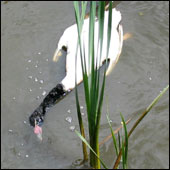 these substances are precisely those that appear in the tissues of dead black-necked swans and other species of birds and fish in the Cruces River Sanctuary in Valdivia, Chile. Thirty thousand swans, emblematic in the region, have been killed since it began operating the Celulosa Arauco (Celco) using the ECF, the same system that Ence and Botnia say it will be safe on the River Uruguay. Arauco and the Chilean government said the same but now the mischief is irreparable and incalculable loss.
 For more information on this episode www.accionporloscisnes.org recommend visiting.
According to the information handled by experts across the river (see www.noalaspapeleras.com.ar and http://www.blog.labrys.com.ar/2006/02/04/campana- c2% a1paren-to-the-paper ) the operative cause of these plants, including other damage, three major effects on water, air and soil: 1) the discharge of 86 cubic meters per day of toxic industrial effluent would have a devastating effect on the underwater life of the Uruguay River, 2) the emission of pollutant gases affect the atmosphere within a radius of 50 kilometers around, which would generate acid rain on the area and would fill the air with carcinogenic and bioaccumulative substances, 3) the accumulation of 150 tons per year of hazardous solid waste cause pollution of land and water groundwater, substantially modifying the existing balances.
turn for more information on the subject dioxins and furans see www.guayubira.org.uy / cellulose / CFI_BM_Critica_RAPAL.htm in citing, inter alia, the following sources: Carrasco Letelier, Leonidas. Environmental contaminants derived from pulping and bleaching of wood pulp (2004). Greenpeace. Pulp an paper (1992). Http://archive.greenpeace.org/toxics/reports/gopher-reports/chlora3.txt . Green Press Initiative (nd). Chlorine Free Products. www.greenpressinitiative.org / chlorinefreeproducts.htm . Rotard. Dioxins (1987). Www.media.payson.tulane.edu:8086/spanish/envsp/Vol324.htm . Stringer, Ruth and Johnston, Paul. Chlorine and Environment: An Overview of the Chlorine Industry. Kluwer Academic Publishers (2001).
Fanapel even to the modest plans to reconvert the TCF, it is a processing method that minimizes risk and reduces environmental damage, which are usually inevitable in this industry.
One wonders if a small domestic industry, as Fanapel that in Juan Lacaze produce between 30 thousand and 35 thousand tons of pulp, is able to diversify and use the TCF, why can not they do these monsters transnational provide a gigantic production, 50 times higher: one million tons Botnia and Ence half a million.
The reasons seem clear: the system is significantly cheaper ECF the TCF and the Uruguayan government has not bothered to apply to require the latter, which should as a minimum condition prior to the installation of these plants
Currently there are only two plants in the world to produce one million tons and are not in Spain or Finland, but in China and Brazil. The installation of these plants in Uruguay, which together will become the largest producer of cellulose and a half million tons annually, is part of a larger plan by the North to move much of the industry highly toxic to areas of underdeveloped countries. A strategy that meets several objectives, including: away from the core countries of the danger of pollution, which poisoned the poor, as in most poor countries are not developed environmental awareness or adequate means to control polluting industries, and produce significantly lower costs, tax privileges, tax exemptions, raw materials and cheap labor. This strategy is part of the imposition of a forest model based on monocultures of fast growing species in most underdeveloped countries.
THE STORY OF THE investments that generate employment
other hand, those advocating the installation of cellulosic argue that they are positive it will generate jobs. Nothing more false. It is true that, in part, for two or three years, during the construction of the plant will create some jobs in construction and complementary industries and services, but that's bread for today, hunger tomorrow.
actually only Botnia plant will employ about 300 people, most of which will be technical and a high percentage of foreigners. There will be only a few places for highly skilled workers and there are only eight people jobs for high school down. So the famous jobs for residents of Fray Bentos will be in anything, not thinking that generate some employment for some Uruguayan elsewhere, unless a technical or professional specially trained to work in the industry and has a similar fate to win the five gold, because if any jobs will be well inches.
But more serious is that the number of jobs that will destroy this industry will be significantly greater than those created. It lost hundreds of jobs in agriculture, in agriculture, beekeeping, fisheries, in hotels and tourism, among other important areas of the economy, not just the residents of Fray Bentos but throughout the country.
is reported that all activities economic in the rural areas, the forest is one that uses less labor, less even than cattle ranching, an activity that had the worst rate in the country before the initiation of afforestation. Just one example: ten thousand hectares of forest employ on average 45 people. In the same area gardening (an activity which is in the middle of the ranking table as a source of employment generation refers) provides 1330 jobs, ie, thirty times more than forestry.
According to agricultural census data of 2000 the number of permanent workers per thousand hectares of forest area is 4.49. The beef cattle herd generates 5.84 permanent jobs in the same area of \u200b\u200bland, while sheep ranching provides 9.18 jobs. And these, together with the production of rice (7.75), are the worst figures. At the opposite extreme are subsistence-based production (262 jobs per thousand hectares), poultry (211), wine (165), horticulture (133) and pig production (128), while in the middle houses the dairy cattle production (22), machinery services (20) and cereal and industrial crops (10).
addition, forestry jobs are of poorer quality, status and remuneration to the extent that they have been classified as slave labor. The experience of afforestation in the past twenty years reveals that this industry has destroyed ecosystems, fertile land has decertified suitable for livestock and agriculture, has expelled the settlers from their lands and destroyed hundreds of jobs in various areas, impoverishing the country and its future possibilities.
 In the departments of Tacuarembó, Rivera and Paysandu, north of the country, thousands of settlers who leased plots for various crops, in most cases family farms or farms of small and medium sized producers, were expelled from their land by the owners for payment into plant eucalyptus or sell them to transnational afforestation. In those places where it is concentrated up to 200 people employed now just four pawns to keep large tracts of forested area. A series of notes by the journalist and social researcher Victor Bacchetta, published by the newspaper The Republic in August and September 2004, illustrates this process in greater detail and clarity. For Tacuarembó, between 1995 and 2004 the acquisition of one hundred thousand hectares for afforestation led to the displacement of about eight thousand people, according to the local magistrates, and the closure of seventeen rural schools. In that area are now working less than five hundred forestry workers. In Rivera, in a similar area and the same period, more than eighty estancias were abandoned.
 However, there are those who refuse to lose the investment in afforestation and expense of the suffering of the rest of the country and the high risk of a serious environmental deterioration, pushing the government to become Uruguay in a forest country, ie stop being the "Uruguay Natural" whose image has been promoted in advertising and how to become a kind of banana republic of transnational forest.
Harm to the country will be enormous, particularly for the Black River department itself, whose spa Las Cañas, one of the most beautiful and most popular attraction in the country, located eight kilometers downstream of Fray Bentos, will be the biggest loser. Who will spend the summer in a place where it smells like rotten eggs? Who is going to bathe in the waters of a beach on which daily dumps thousands of gallons of chemicals hazardous to health, particularly the well-known persistent organic pollutants (POPs)? The jobs will be lost in the tourist area have not been evaluated but no doubt add a relevant figure.
Incidentally, to allow installation of cellulosic government violated international agreements The country signed the Stockholm Convention as to reduce the emission of dioxins and furans. Uruguay, against the world, will increase emissions of these substances.
But not only tourism in Fray Bentos will be resentful, also across the country and in particular the East Coast, because the image of "Uruguay Natural" has been badly damaged by this whole affair and the stubborn refusal Uruguayan government to listen to Argentine environmentalists protest and warnings from environmentalists caused Creole havoc on the country's tourism potential, particularly in the years ahead. Tourism accounted for in the year 2005 a high percentage of total foreign exchange earnings to the country, so threatening the continuity of this income is violating the country's economy and the interests of the country itself.
But the worst thing is that if the government maintains its stubborn position is a risk that the conflict with Argentina getting worse to the point of questioning the commercial relations with major buyers of our export production.
The Uruguayan union carriers, with export sectors, recently announced that the country lost more than thirty million dollars in the wake of this conflict. How long will the Uruguayan government maintaining a leading position in our economy and the country to critical situations and ruined?
the sake of defending a position favorable to the cellulose-untenable at this point, is threatening one of the keystones of the country's economy: exports to the Argentine market. We must not forget that the campaign to boycott certain products or brands, usually used as a way to combat the environmental organization Greenpeace, tend to greatly affect output and consumption of such goods.
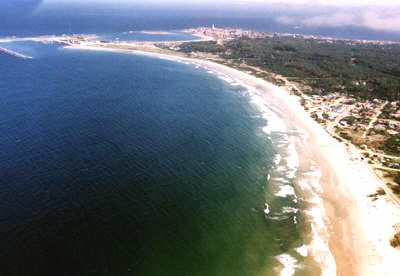
On the other hand, when our international label "Uruguay, Country Natural consumers lose confidence to international tourism will suffer and the world begins to stop buying our products, do not say trees, but meat, hides, wool, dairy, cereal or any other "natural", what you'll say this government to the people? "Garlic and water?
If the installation of these plants brings so many problems and few benefits, why our leaders remain committed to support them. Do Frente not have asked why the main political leaders of the Colorado Party and National Party support the government on this issue in more almost fanatical leftists themselves?
course, seem to have noticed that has mounted a major media paraphernalia for plants, diligently to discredit any opposing view, identifying the matter as if it were a national cause permanent bombardment reminiscent of Goebbels methodology on information.
not because it benefits the country, is because such political organizations are involved in the forestry model, in particular Lacalle and company and therefore the Herrera leader expressed his unconditional support for Vazquez in this matter. What is based, then, the government's position? (See the final paragraph "The bribe, sharks and sardines).
A tip of the iceberg where to begin to understand such a mess seems to be the fact that much of the professional sector Uruguayan-lawyers, doctors, writers, architects and other professionals, as well as other areas of middle and upper class (banking and bankers) in the recent past made large investments in afforestation and now press the government to encourage the installation of the plants, which would give a quick exit, safely and economically without the cost of freight, to the thousands of trees now occupy much of the country.
is known that in the 80 and 90 spent many university graduates in forestry. Is paradigmatic for the boxes of professionals, notaries and banks, which have large forested. It is known that the guild bank (AEBU) supported an agreement between Botnia and the Bank Fund for this institution to provide wood to the Finnish crime. If we add to this background that some leftists still hold the illusory dream of returning to the industrial past, with many factories belching smoke from their chimneys and the growth of the industrial proletariat as the backbone of a future social revolution, then one can begin to understand why the left are very few who question this new barbarism to which we want to submit the rule and the Frente Amplio government more than tolerated, supported with unusual fervor.
 The kickback, shark and sardine
 Although the Uruguayan foreign minister has maintained that our government will not accept bribes, suggesting in an elliptical shape that did would have made the Argentine authorities, the been given the opportunity, it is undeniable that all Uruguayan political parties represented in parliament (including the Frente Amplio) and accepted the money companies put Botnia and Ence on the table to fund the travel of a large group of parliamentarians to the old continent who traveled with all expenses paid with the excuse of going to inspect the cells in their respective countries.
reality is that there is big money involved, these companies do not skimp on finance giant advertising campaigns either for or appeal to whatever means to win converts, and that the purchase of consciousness is in the order of the day. To have gone so far as to organize massive parties and give away tons of toys and school in the slums of Fray Bentos to capture the sympathy of the public. If you were not so gullible might think that this is pure demagoguery.
recently reported that the Botnia company paid just over four thousand dollars to an environmental leader Fray Bentos to act covertly among Uruguayan environmentalists in order to stop the demonstrations against the installation of plants, and influenced the Gualeguaychú citizen assembly to promote a level of understanding between the parties. The directors of the company publicly acknowledged that he had given to so-and only 50 pesos (about two thousand dollars) to take charge of such efforts, but denied that such conduct could be characterized as bribery.

Although all members of the squad leader would be so naive as pristine, there are some facts that can not be denied: because it is undeniable that the current government's position on this matter is fully functional to the interests of the United States. Clearly a strong Mercosur conspires against hegemonic plans of the empire. Especially with the coupling of Chile, Bolivia and Venezuela, a powerful bloc that would shape not only economic but also political and that in the short and medium term, could become at least great discomfort for the giant to the north.
why the United States lunges to the FTAA and therefore, for the purposes of its strategy, it is functional weaken Mercosur, as it will go. In this context, the controversy over the pulp and the increasingly bitter rift in relations between Argentina and Uruguay accrues to U.S. interests and goes against the interests of our nations. It is no coincidence, then, that some government voices begin to speak favorably of a possible bilateral free trade treaty with the United States. It fulfills the old law, the big fish eats the small.
The newly announced by President Vázquez in the headquarters of the empire, about the imminent departure of MERCOSUR Uruguay, not only confirms the sad suspicion: the old empire still rules, although people have voted for change and socialism . Again, the facts call for not relent in the fight for old dreams. Walter
Falco
Montevideo, May 2006.


0 comments:
Post a Comment